How we sign clients online — and why we built it ourselves.
The most dangerous moment in a small business's sales process isn't the pitch. It's the week after someone says yes — when nothing is signed, nothing is paid, and the job can quietly evaporate. Here's the system we built to close that week to a few minutes, and what we learned building it for ourselves before offering it to anyone else.
The problem is the gap, not the pitch
Every studio has had the conversation that ends well and then goes silent. The customer meant it. But 'send me something to sign' turned into a PDF they had to print, a bank transfer they had to remember, and three days in which a competitor rang back. The deal didn't die — it just never got born.
So the brief we set ourselves was narrow: from "yes" to signed and paid, on a phone, in under five minutes, with nothing for either side to remember.
What the client actually experiences
- An email with one private link. No account, no password — the link itself is the key, exactly like an unsubscribe link.
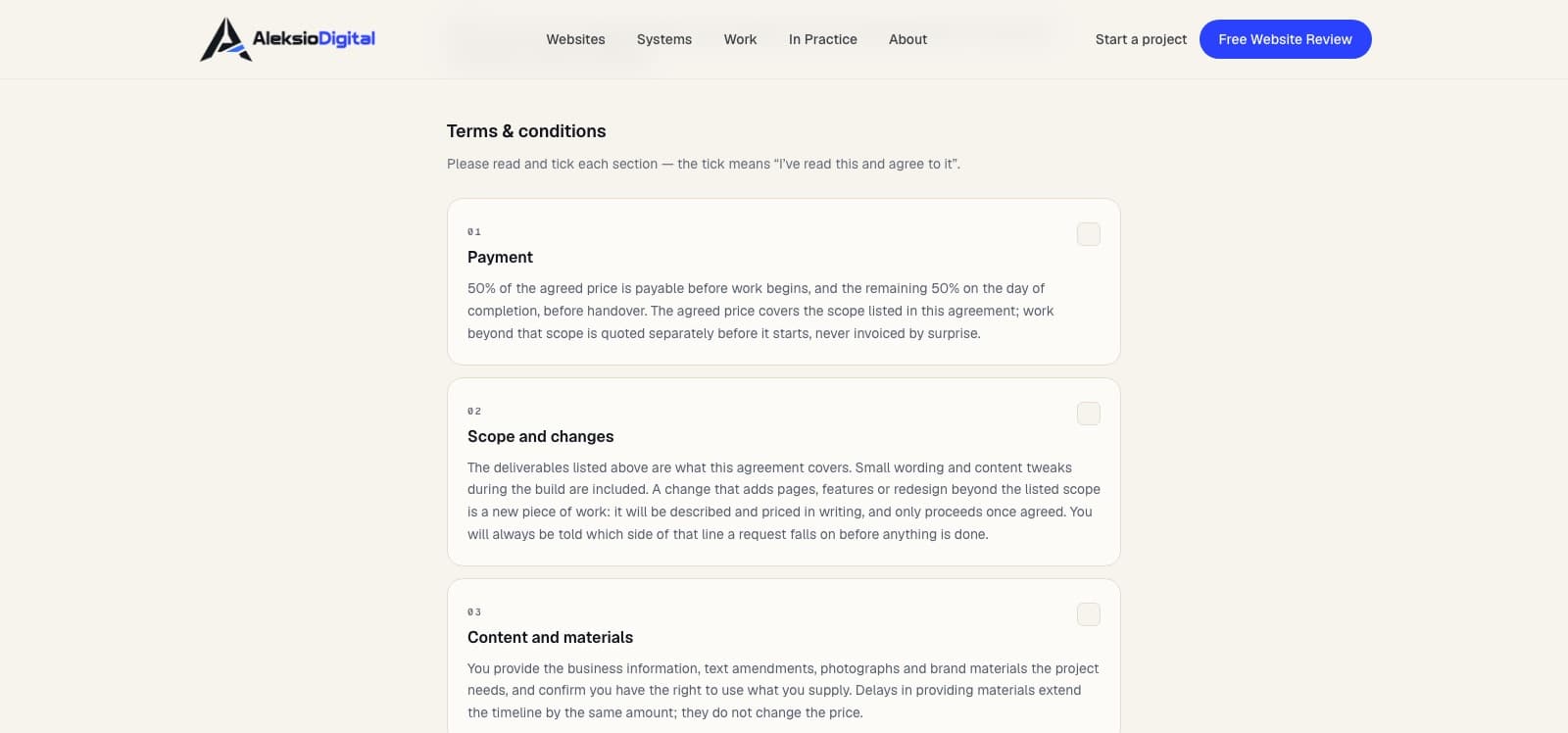
- The agreement, readable on a phone: a short personal note, the scope as a list, the price in plain figures, and the terms — each section with its own checkbox.
- They tick every section. The sign button stays locked until they do, with a live count of what's left. Nobody can later say a clause slipped past them.
- They type their full legal name and press Accept & sign.
- Within seconds, both of us receive a PDF of the full agreement — our design, our logo, the signature block, and a discreet evidence line at the foot.
- The same page and the same email offer Pay the deposit. One tap into a card page hosted by Stripe; the moment it clears, both sides are told and the job is on.
What happens on our side
The moment a client first opens the link, we're told. That single signal — opened but not signed — is the most useful thing the system produces, because two days of it is the cue to pick up the phone. If a proposal sits unsigned for three days, one polite nudge goes out on its own; only one, ever, because the difference between a reminder and a nag is whether the system remembers it already asked.
Proposals lapse after fourteen days. That isn't pressure — it stops anyone signing a price that has quietly gone stale. And once signed, an agreement locks permanently: it can't be edited or withdrawn, which protects the client every bit as much as us.
Why we didn't just subscribe to DocuSign
- It had to wear our brand. The PDF in a client's inbox is the last thing they see before paying us. 'Powered by' someone else's logo in that moment is a strange thing to accept.
- Terms had to be versioned properly. Every agreement snapshots the exact wording it was signed under. Update the terms tomorrow, and yesterday's contract is untouched — as the law expects, and as most e-signature tools make surprisingly awkward.
- It had to talk to the rest of the system. The reminders share the same daily job that reminds people about booked calls; the emails share the same sender; the admin sits beside the call diary. One system, not five subscriptions bolted together.
- And, honestly, because we sell this. A studio that builds booking and onboarding systems for clients should be running one. Every detail above exists because we hit the problem ourselves first.
What it deliberately isn't
It isn't accounting software, a CRM, or legal advice. The terms are ours, written from the promises already published on this site — and even so, a one-off review by a solicitor is the cheapest insurance a liability document can have. And it isn't for contracts that need a witnessed or qualified signature; for a service agreement it is exactly right, and for those it isn't, we'd say so.
If your business has the same quiet week after 'yes', the system is described on its own service page — and if you'd like to see it working, book a call and we'll send you a real agreement to poke at.
More from In Practice
How much does a website cost in Scotland?
Real numbers for what a small-business website costs in Scotland in 2026 — published prices, the costs people forget, and the questions worth asking anyone.
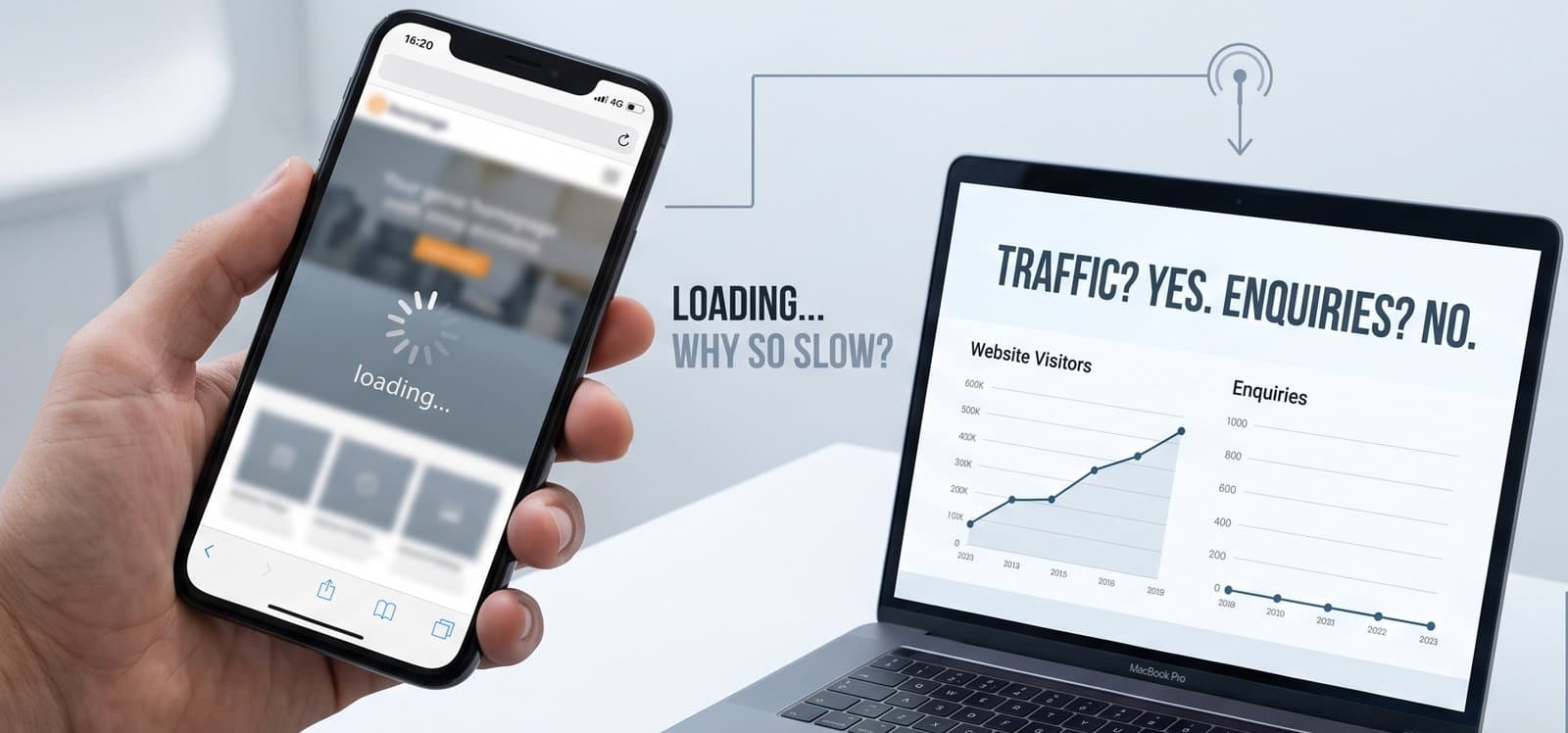
Your website gets visits but no enquiries. Here's where it usually goes wrong.
Traffic without enquiries is rarely a traffic problem. The things that quietly stop a small business website converting — and what to check first.
Want this applied to your site?
A Free Website Review is a straight assessment of what’s working, what isn’t, and what to fix first. No obligation.